Ford: Proud to Honor: Packaging the Daytona screens
Two 20-minute loops for every non-broadcast screen at Daytona, shipped in three days.
What I did
- Gathered vendor and partner videos and images into one storyboard
- Designed the loop and its order
- Produced 16:9 and 3:2 versions, with content matched to each screen
- Built the image wipe from the PTH art direction
- Rendered both final videos
Most of the source content came from the creative vendor and partner teams. I didn't make it. I made it into a show.
The ask
I was hired to coordinate screen content. The content existed, but it was scattered across teams, folders and aspect ratios. Nobody owned turning it into something a screen could play. I took it on, and Monday became a work day.
Two screens
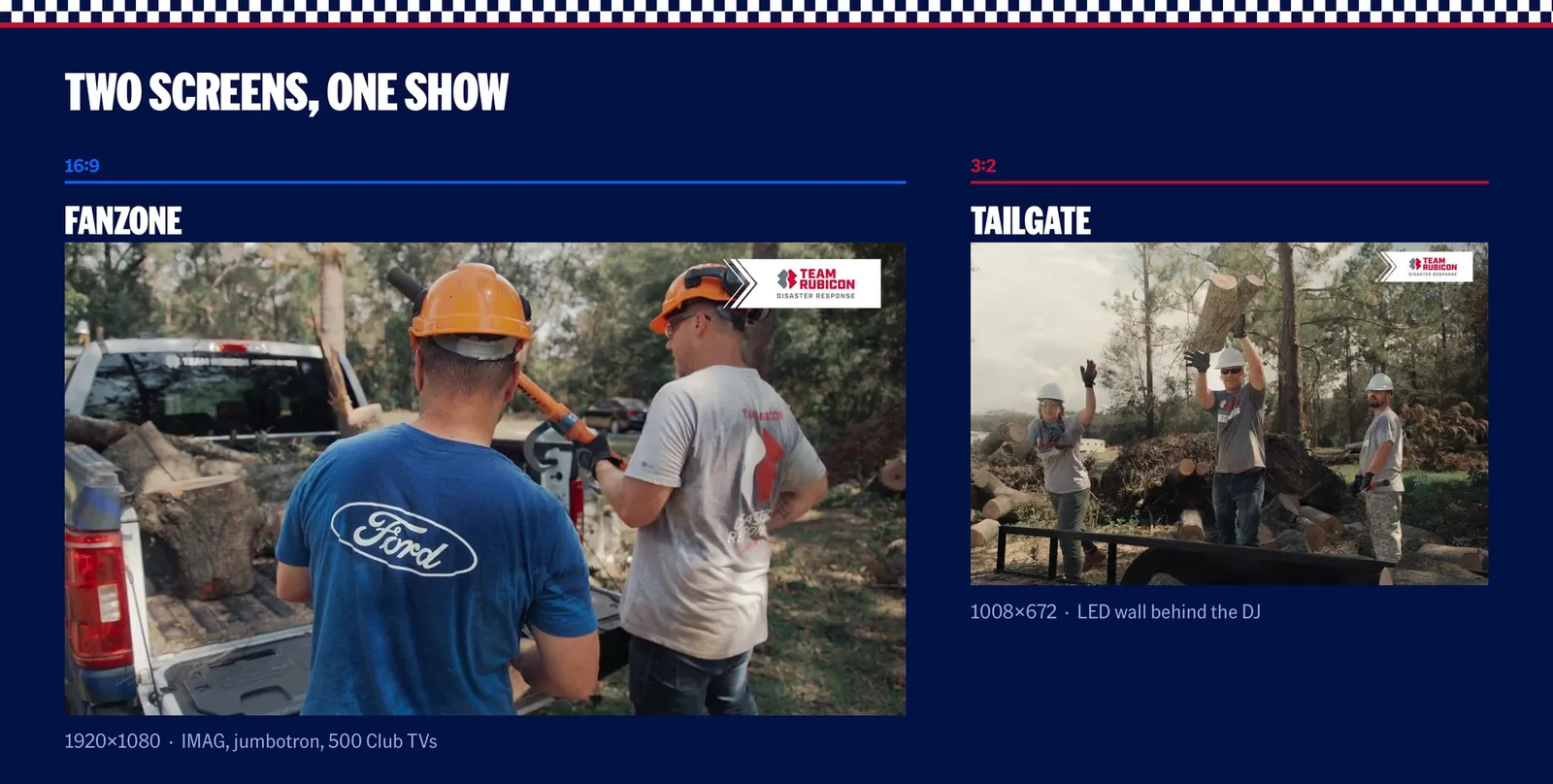
The Fanzone loop played on the IMAG screens, the jumbotron and every TV in the 500 Club. The Tailgate loop played on the LED wall behind the DJ. Each screen got content in its own shape, and wide sponsor art stayed centered, never cropped.
The storyboard
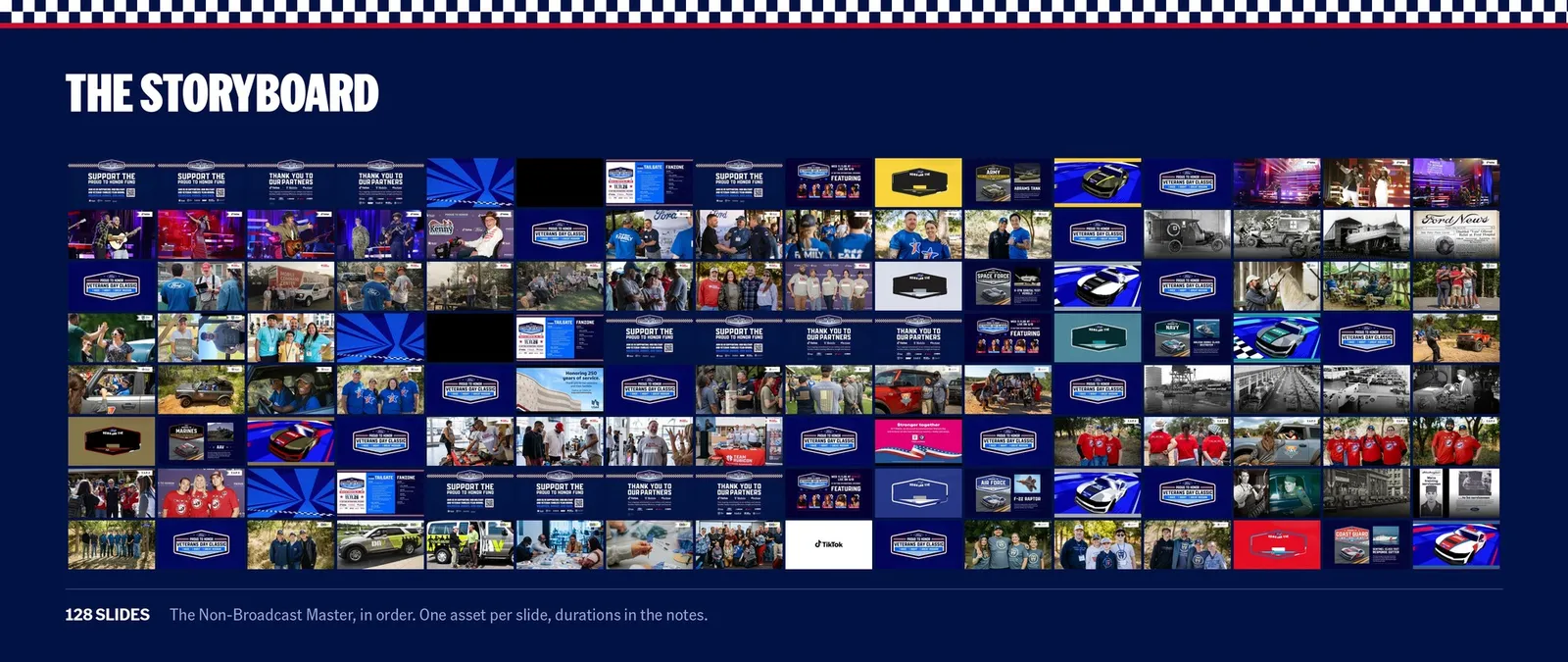
The Non-Broadcast Master was a 128-slide PowerPoint: one asset per slide, durations in the notes. Most stills hold for 5 seconds, some for 10, and videos play in full. It was the single source of truth for both renders.
The loop
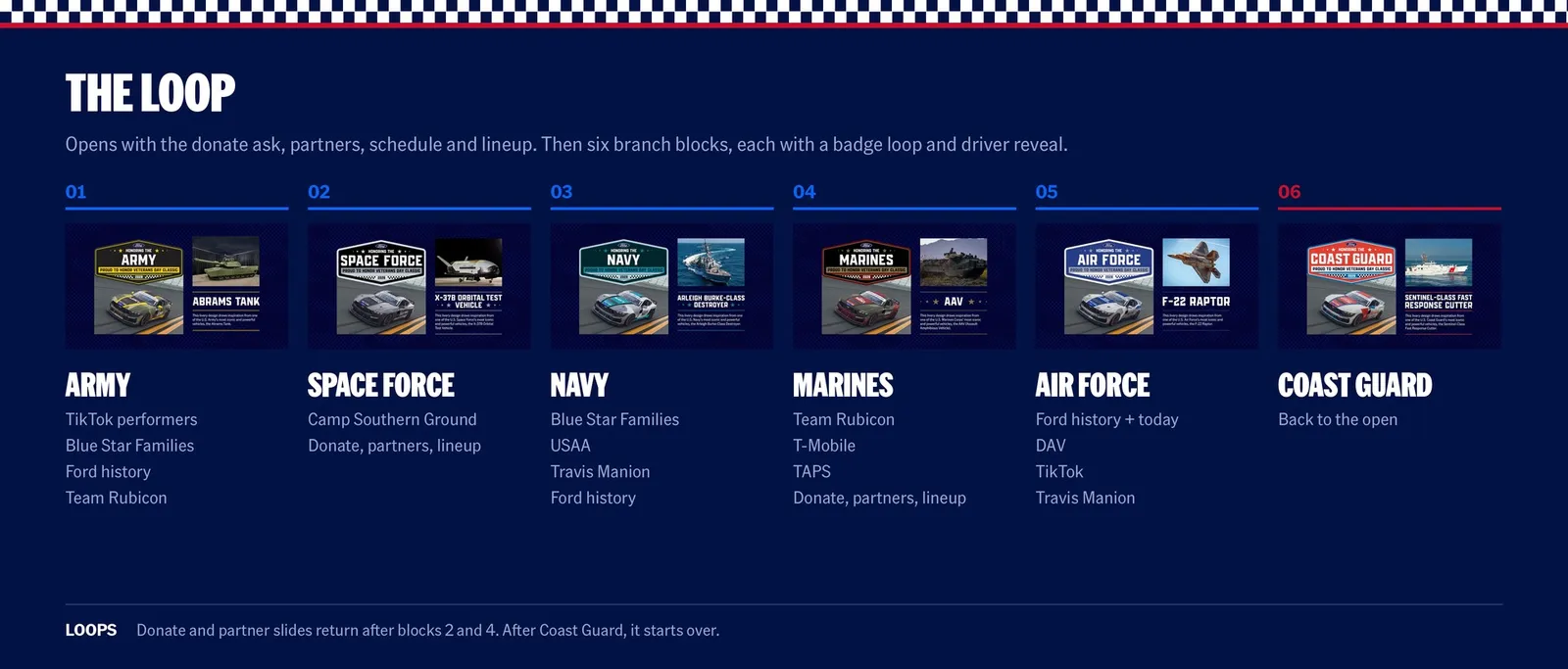
I built the loop around the six military branches. It opens with the donate ask, partners, schedule and lineup. Each branch then gets a block: its badge loop and driver reveal, followed by a rotation of sponsors and veteran service organizations. Donate and partner slides return after blocks 2 and 4. After Coast Guard, it starts over.
The wipe
Inside the VSO blocks, photos change with an angled blue and navy band built from the PTH art direction. Everything else cuts hard, so the wipe marks the VSO sections.
- 2.4 seconds, eased, with motion blur
- Only between two photos in a VSO block
How it was produced
I directed two AI tools. ChatGPT managed the data and media libraries and designed the storyboard pptx. Claude ingested that pptx as its reference, along with handoff files and notes, then pulled in every asset and did the motion design and video edit.
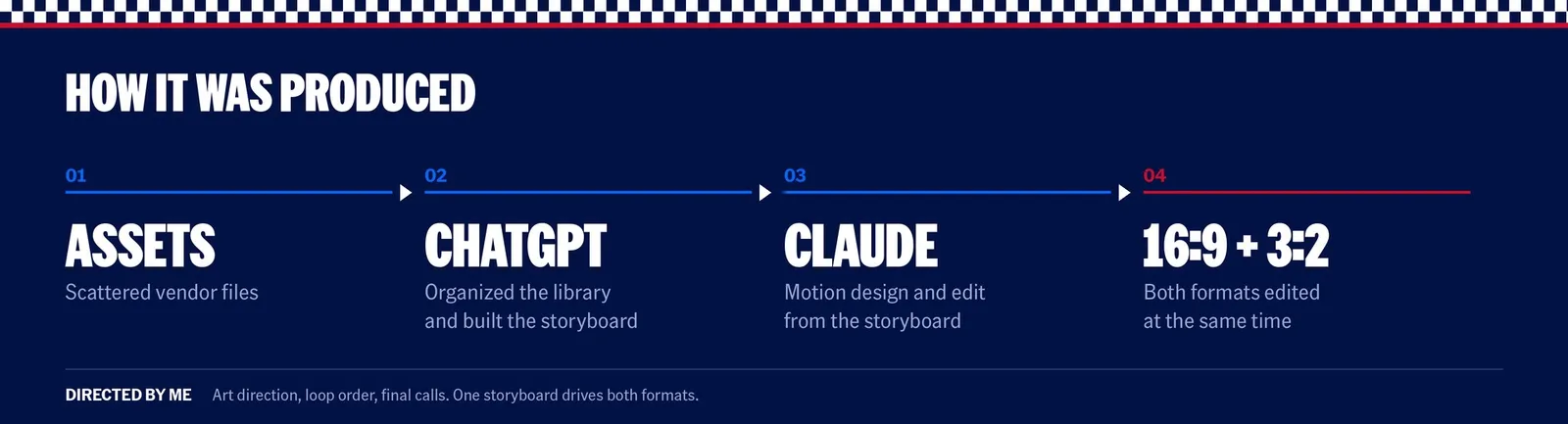
Both formats came from one storyboard and one edit, so I edited the 16:9 and 3:2 cuts at the same time. A deck change meant a new render, not a manual re-edit. That is how a two to three week job shipped in three days.
Outcome
- Both loops ran the full event on every non-broadcast screen
- One storyboard, two formats, about 20 minutes each
- Scoped for two to three weeks, delivered in three days