Dropmate
Exploring a device and display for a clearer cleaning workflow in eye care.
- Problem
- The team wanted a more consistent way to handle eye drop bottles and small tools between appointments.
- My part
- I explored the enclosure and designed display states with input from the founder and engineers.
- Decision
- Use a modular form and make each step clear on a small 128×64 OLED screen.
- Status
- Early concepts only. The NDA limits what I can show, and no user testing happened during this engagement.
The Problem:
The team was exploring a device for cleaning eye drop bottles and small tools in ophthalmology offices. My part was to make the physical steps and the display easier to understand.
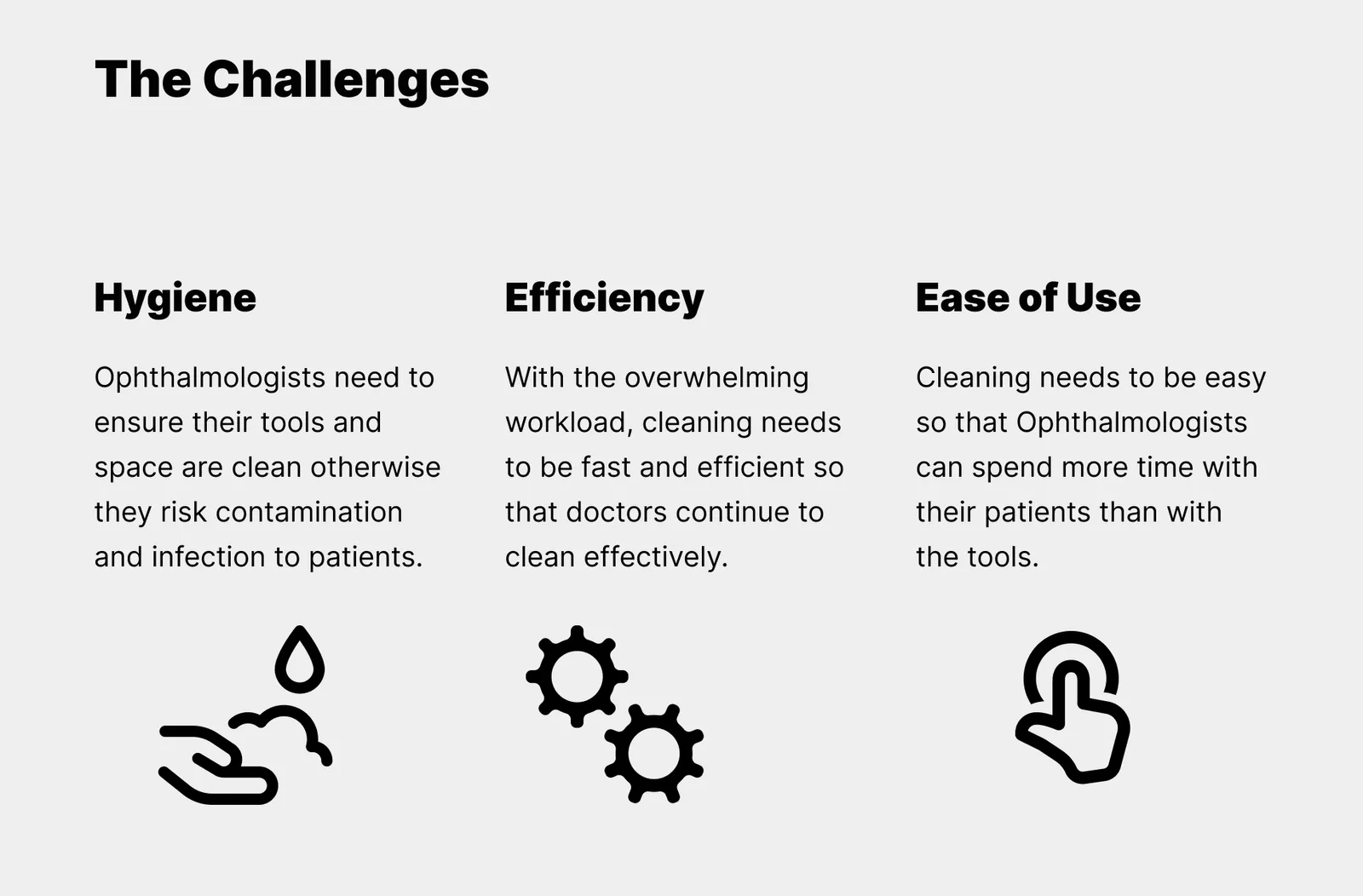
- Difficulty properly disinfecting equipment between patients
- No standardized hygiene workflow for eyedrop products in high-volume clinical settings
Who Would Use This?
We first considered people cleaning their eye drops at home. As we learned more, the work shifted toward clinics, where staff handle many items across appointments.
- Initial focus - elderly individuals needing help disinfecting personal eyedrop products
- Pivot - ophthalmologists' offices, where high patient volume makes maintaining hygiene standards consistently difficult
Designing the enclosure
The founder and engineering team had a technical concept. I joined to shape the enclosure and the steps someone would take to use it.
I looked at equipment already used in eye care offices so the form would feel familiar in that setting.
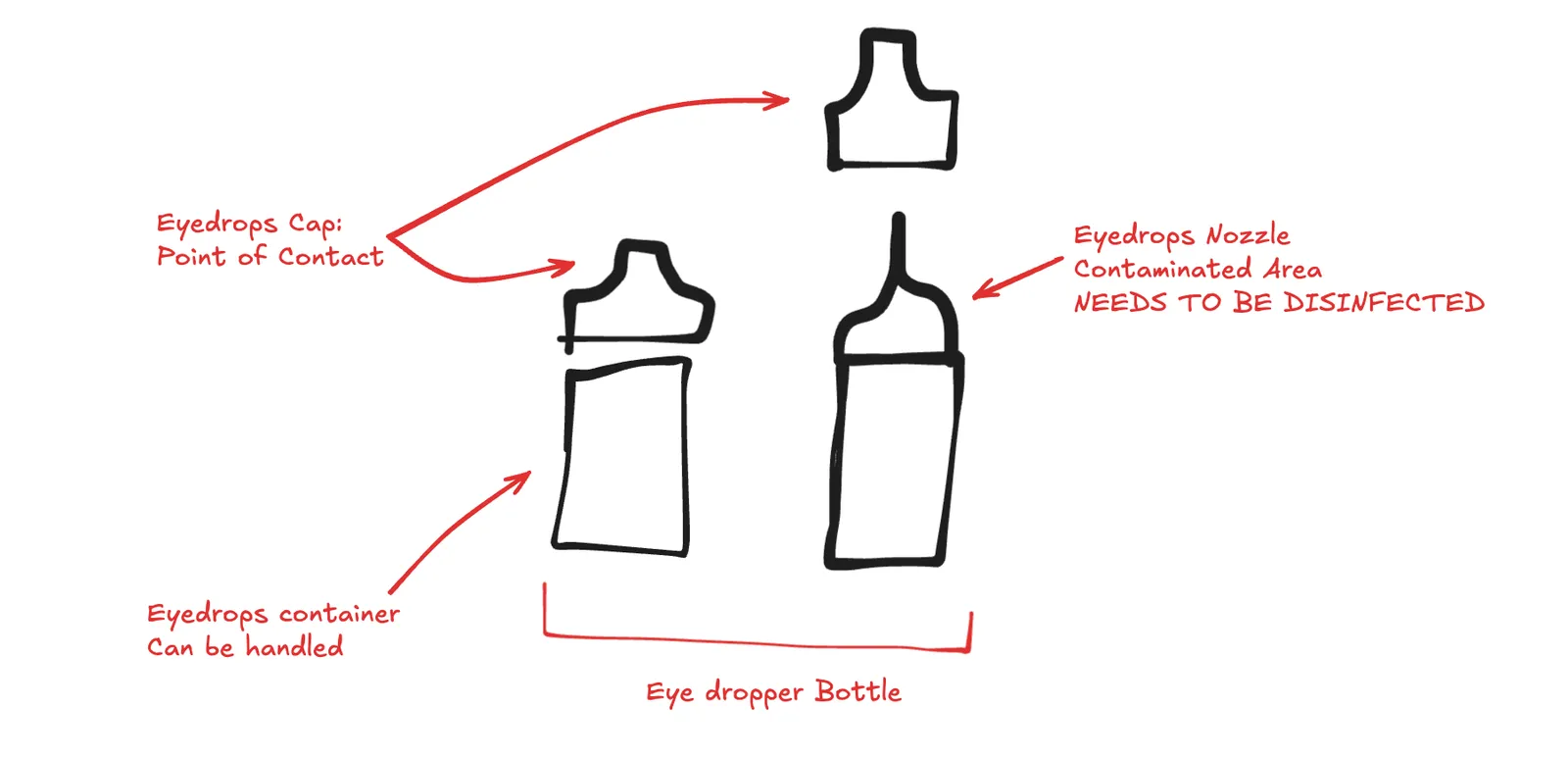
The first sketches focused on two questions:
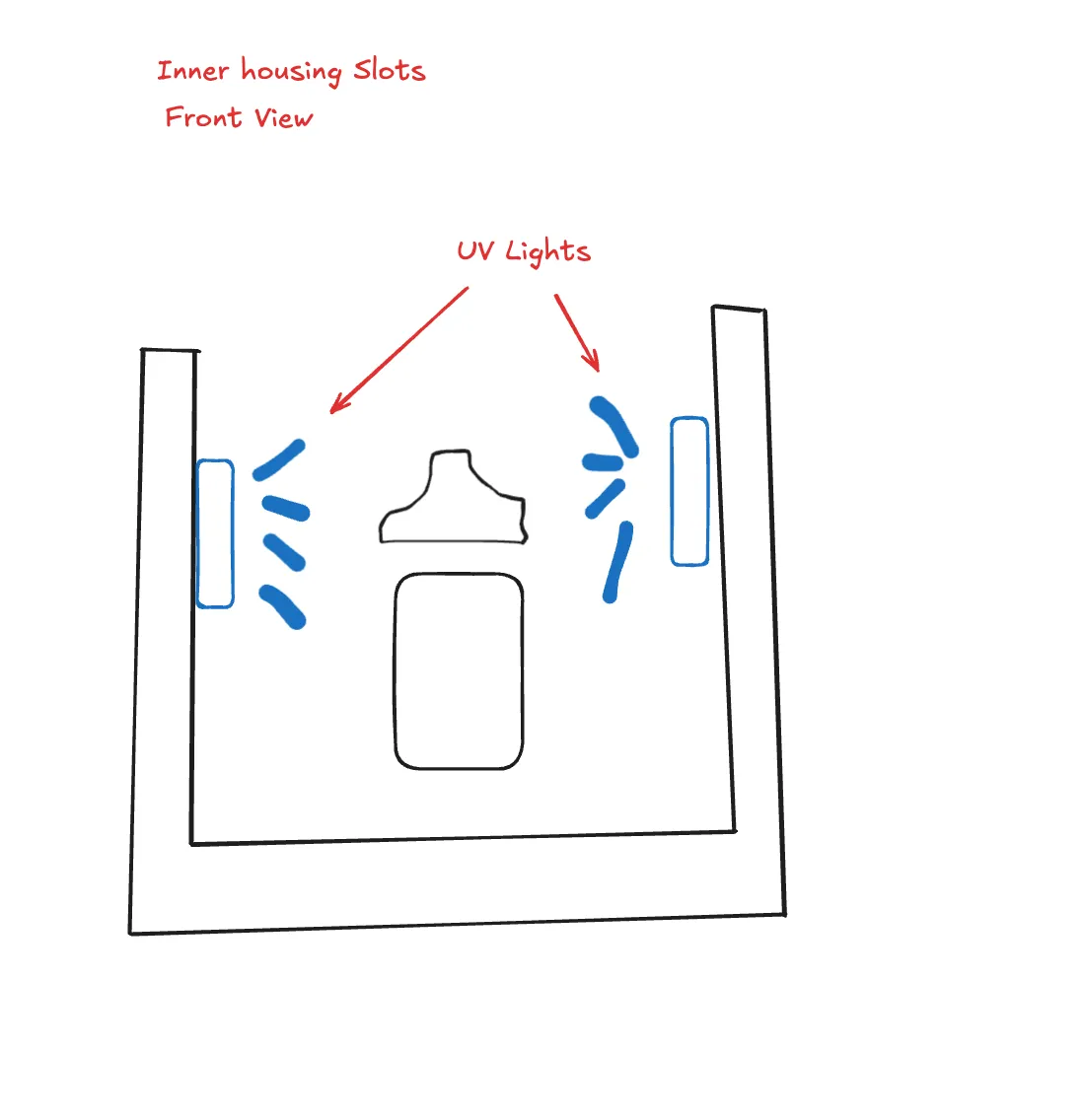
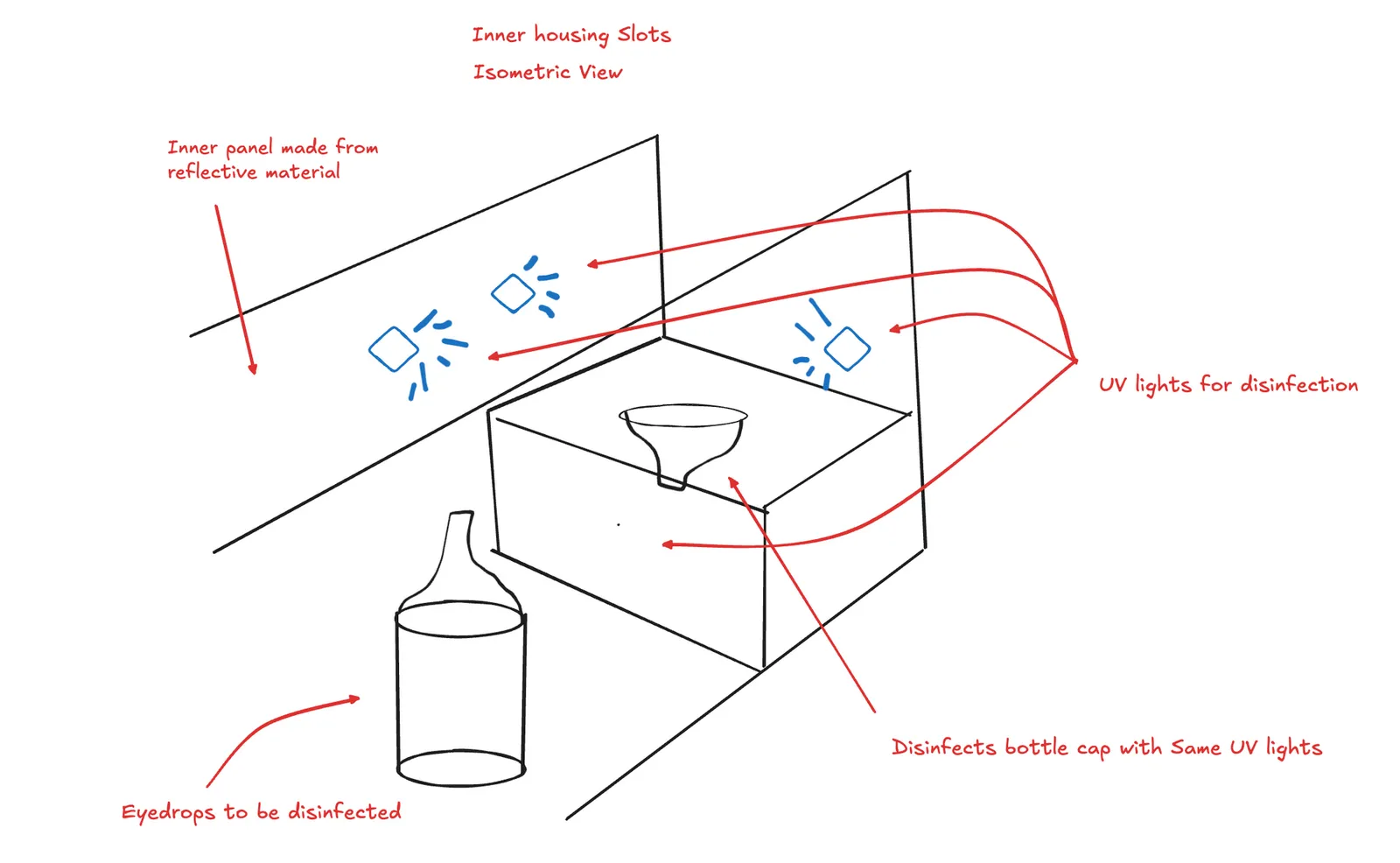
- UV light effectiveness - coverage, intensity, and placement within the enclosure
- Product placement - how eyedrops and tools would be positioned for optimal exposure
Choosing a modular layout
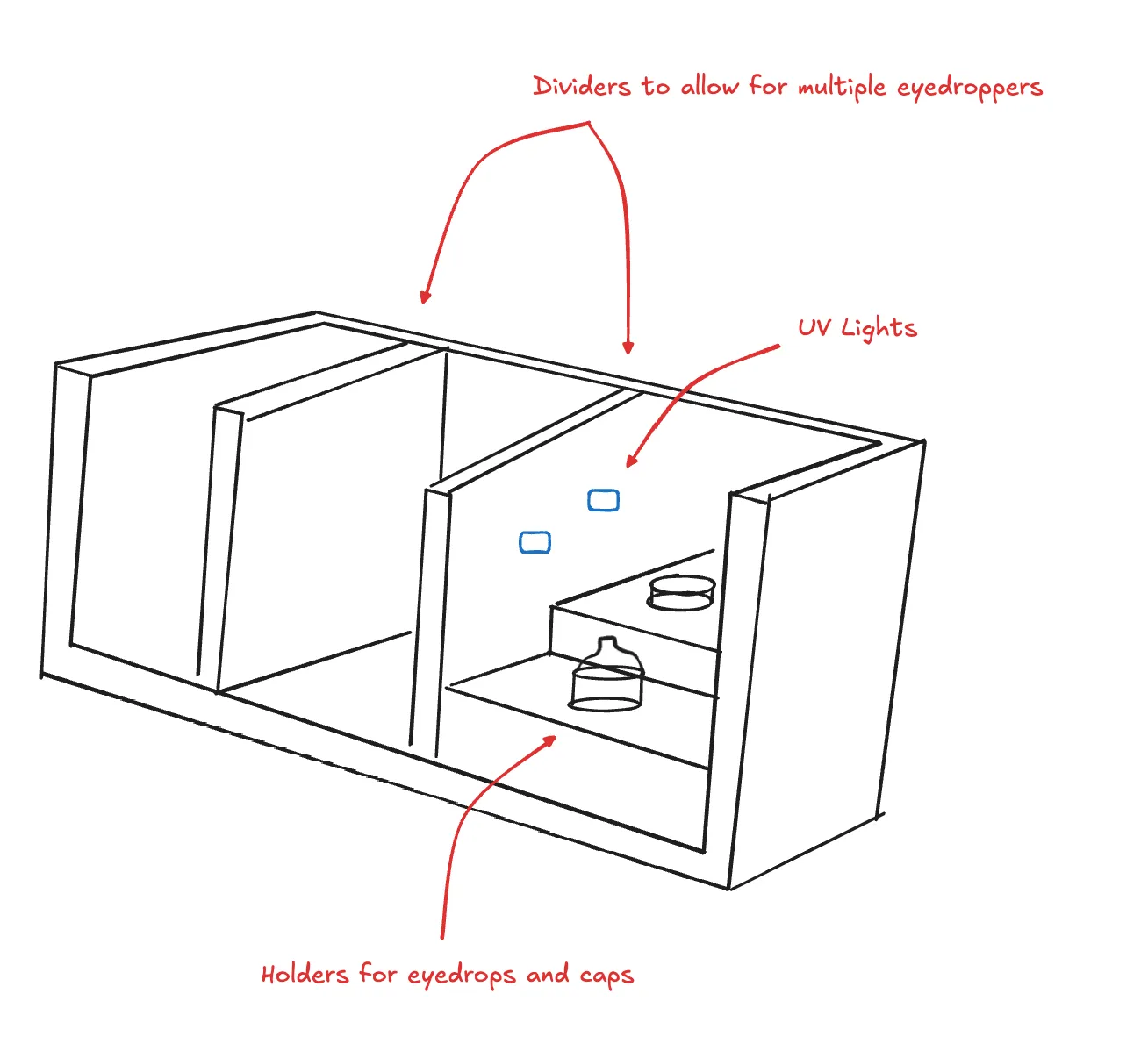
- Modular design - easier to clean individual components and swap configurations
- Hygiene integrity - every structural change was evaluated against cleaning effectiveness
- Ease of use - reducing friction for clinical staff operating the device between patients
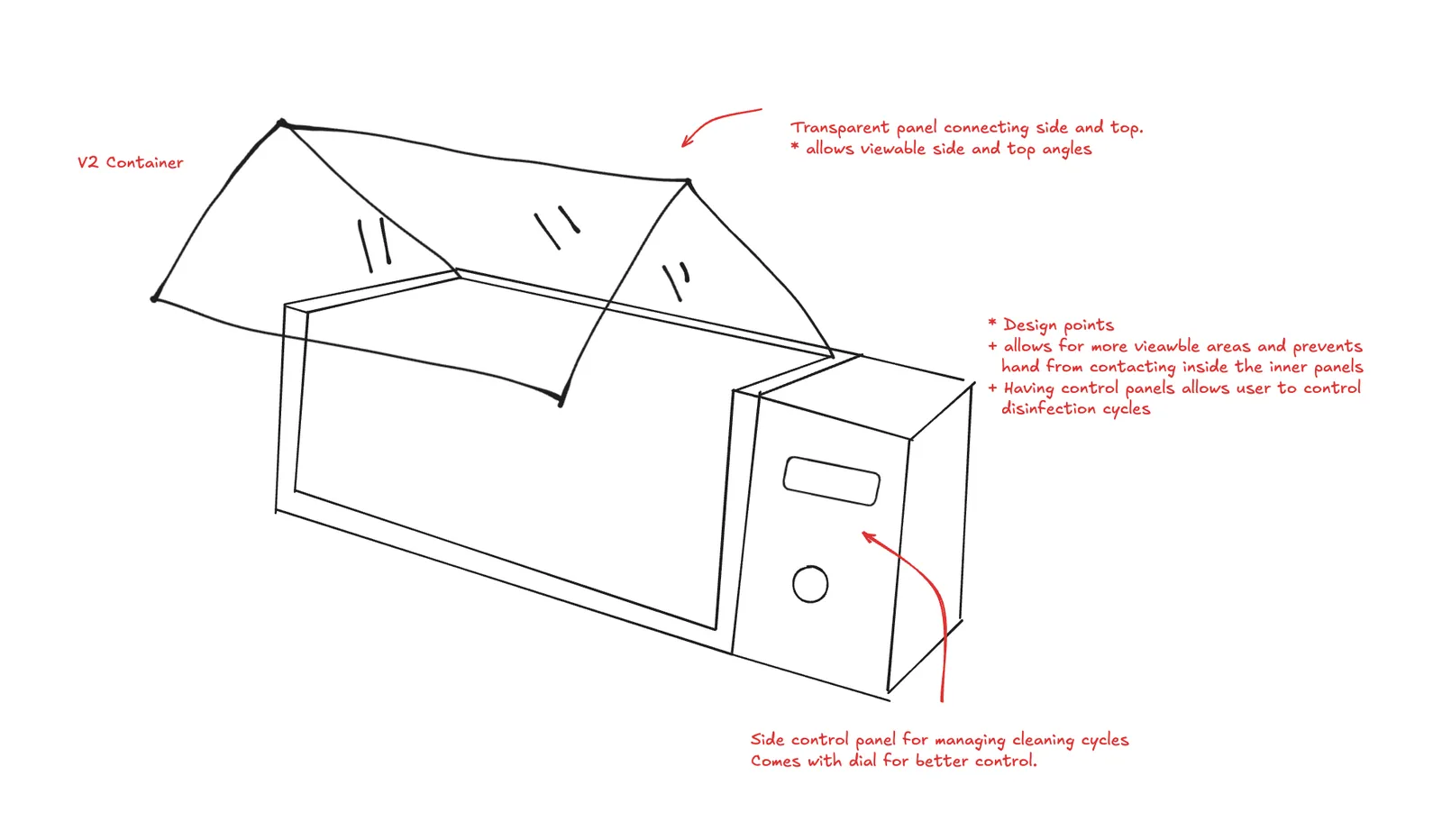
Early enclosure studies
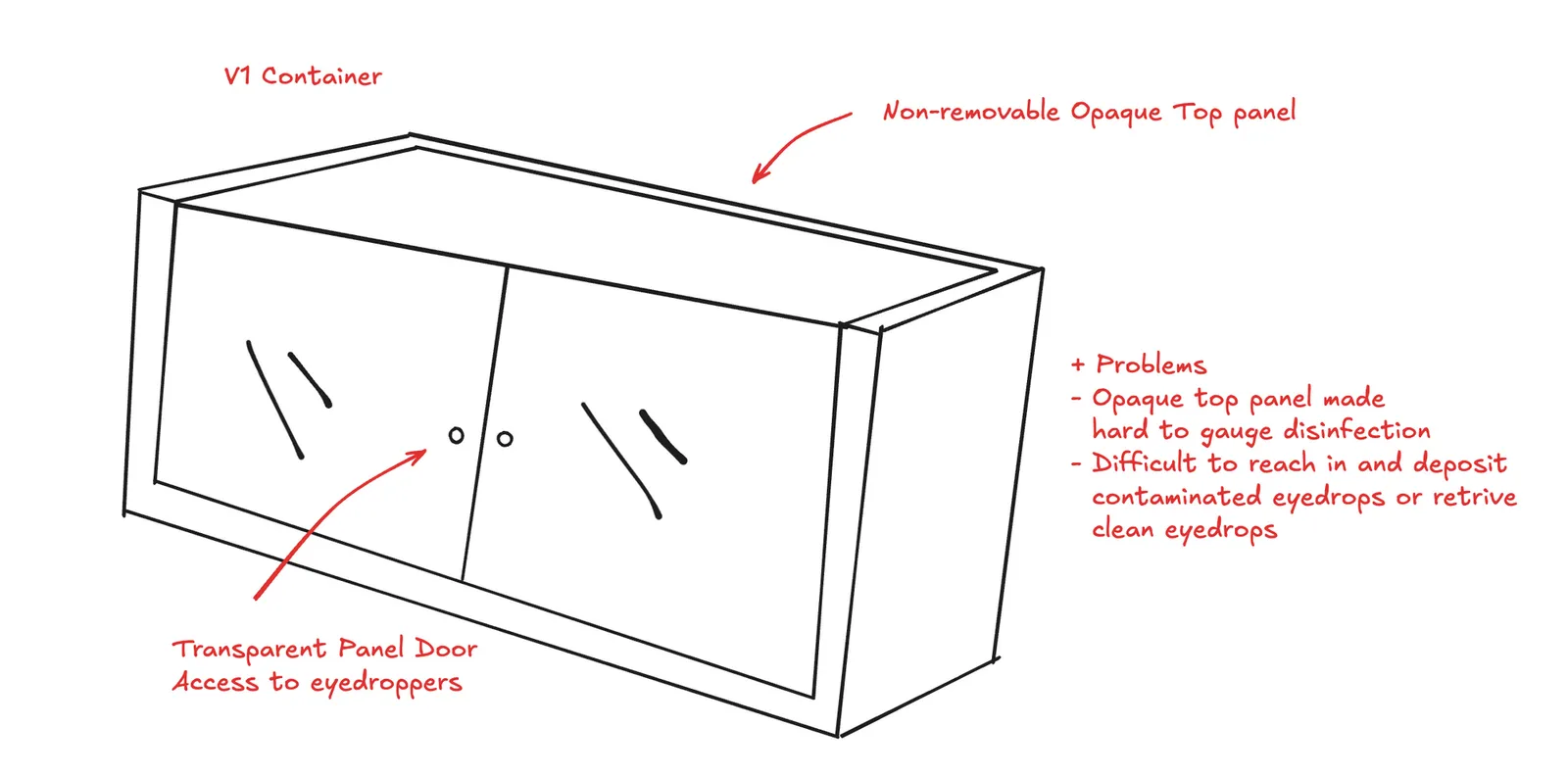
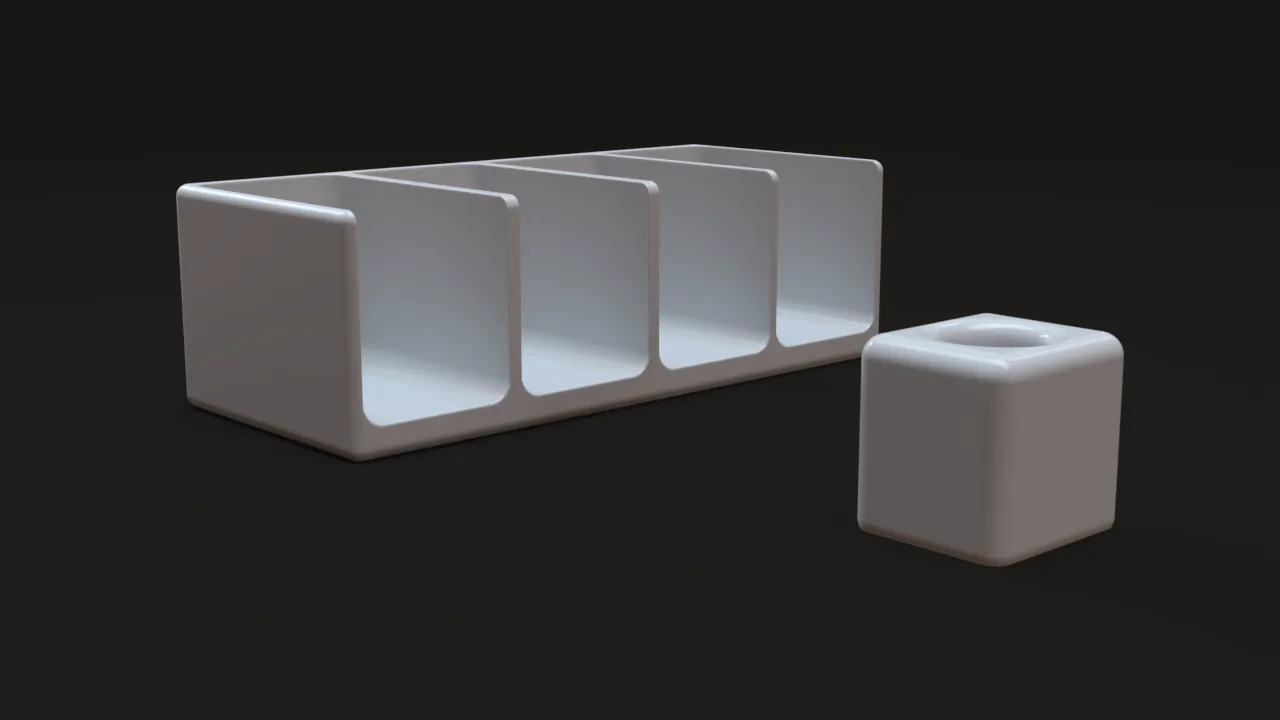
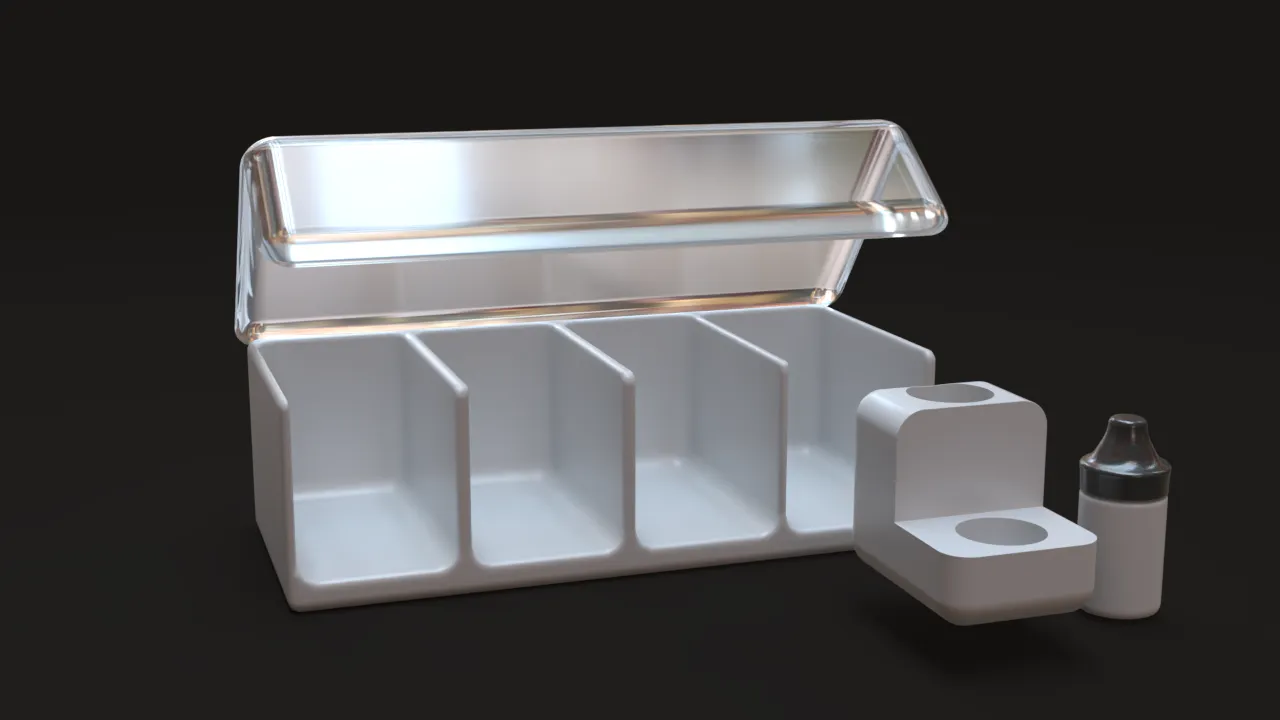
I used Womp to make a quick enclosure model from the founder and engineers’ input. The modular layout gave staff room to place more than one item inside. We also explored where UV lights and different materials might sit. These were layout studies, not proof that the cleaning method worked.
Design Challenges
The NDA means I can show only early 3D concepts. This was the extent of my work on the enclosure: balancing a form that could be cleaned, arranged for different items, and used without slowing down staff.
Designing the display
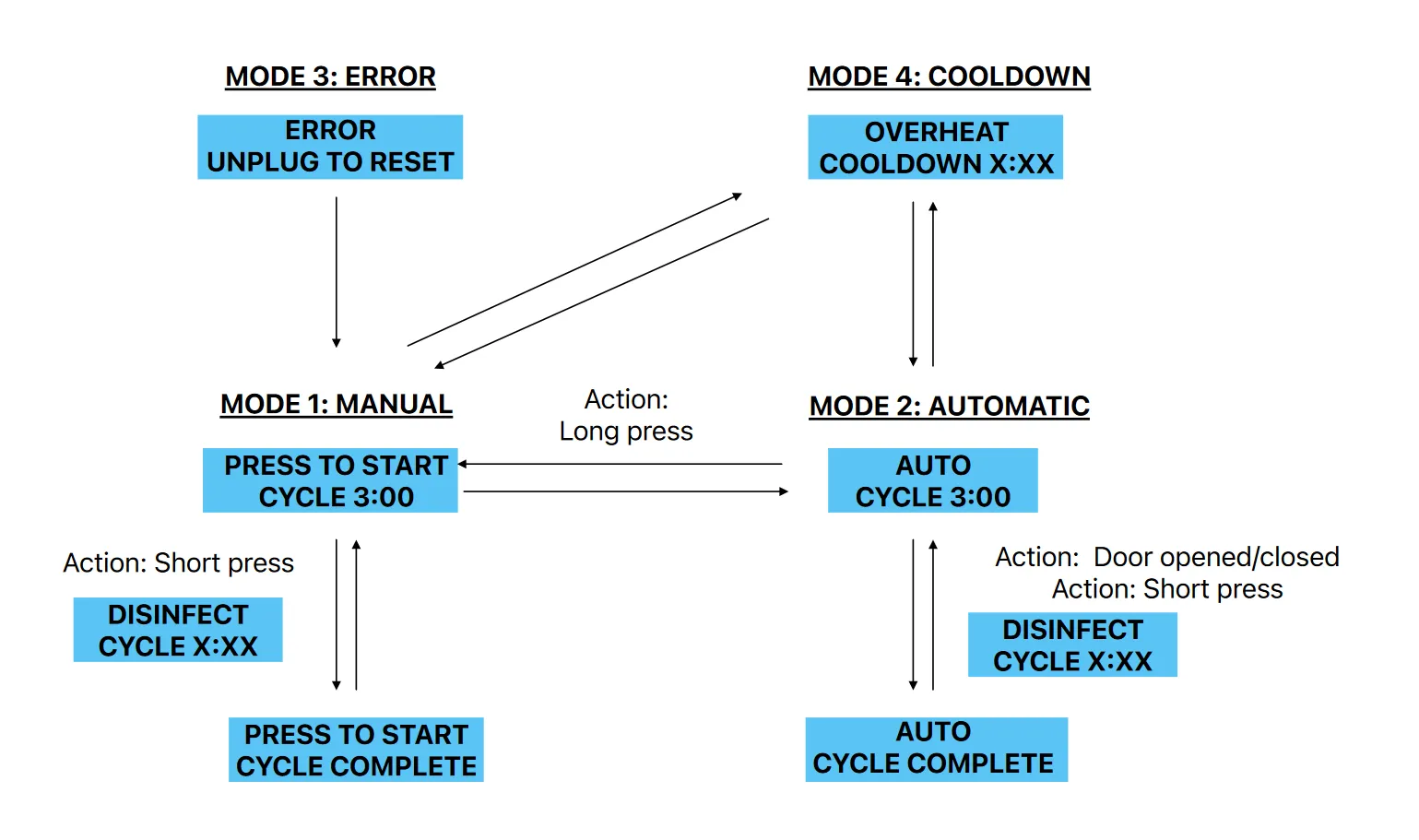
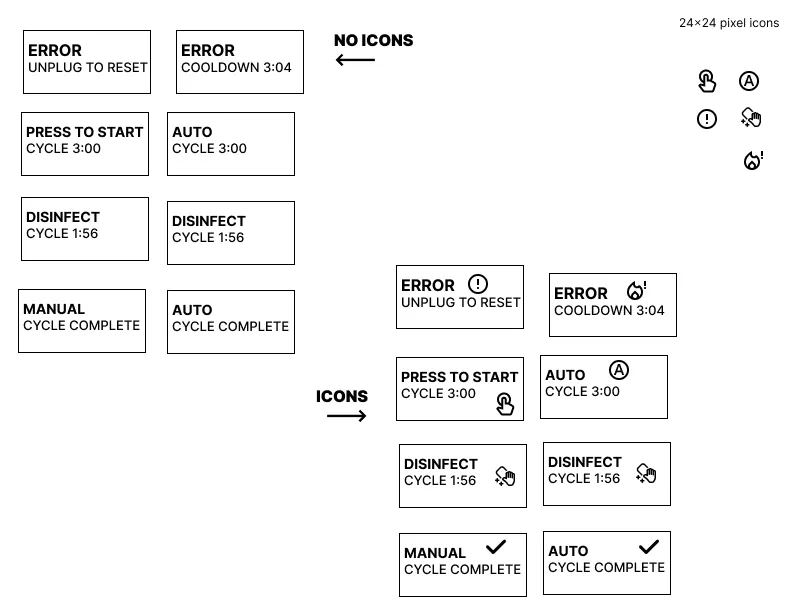
The device also needed to explain its state on a 128×64 OLED screen. I mapped the four required modes, then revised the draft screens so a person could tell what had happened and what to do next.
Refining the states
Engineer feedback led to three changes in the display:
- Rewrote Cycle Complete messaging on Mode 1: Manual to clearly prompt the next user action
- Removed misleading "press start" language post-cycle, aligning the flow with how the device actually operated
- Added clear icons to reinforce status communication and strengthen skeuomorphic design consistency
What still needed testing
We did not run user testing during this engagement. The product was still in early prototyping, and the timeline and access to ophthalmologists did not allow for structured sessions.
Had testing been possible, the priority questions would have been:
- Physical prototype - Does the modular form factor fit naturally into an ophthalmologist's existing workspace without disrupting patient flow? Is the UV cleaning cycle duration appropriate for a high-volume office setting?
- Digital UX - Can a user correctly interpret the OLED display states under clinical lighting conditions without prior instruction? Does the updated messaging reduce ambiguity on mode transitions like Cycle Complete?
- Hygiene confidence - Does the design communicate cleanliness effectively enough that practitioners trust the output without additional verification steps?
Those are the questions I would bring into the next round of physical and display design.
Current Stage
At the time of this project, the product was still in development. I can share only early prototypes under the NDA. The images here are explorations, not the final device.